
Choosing the right instructor can make a major difference to how quickly and confidently you learn to drive. If you are searching for manual driving lessons near me, it is easy to focus only on price or distance. 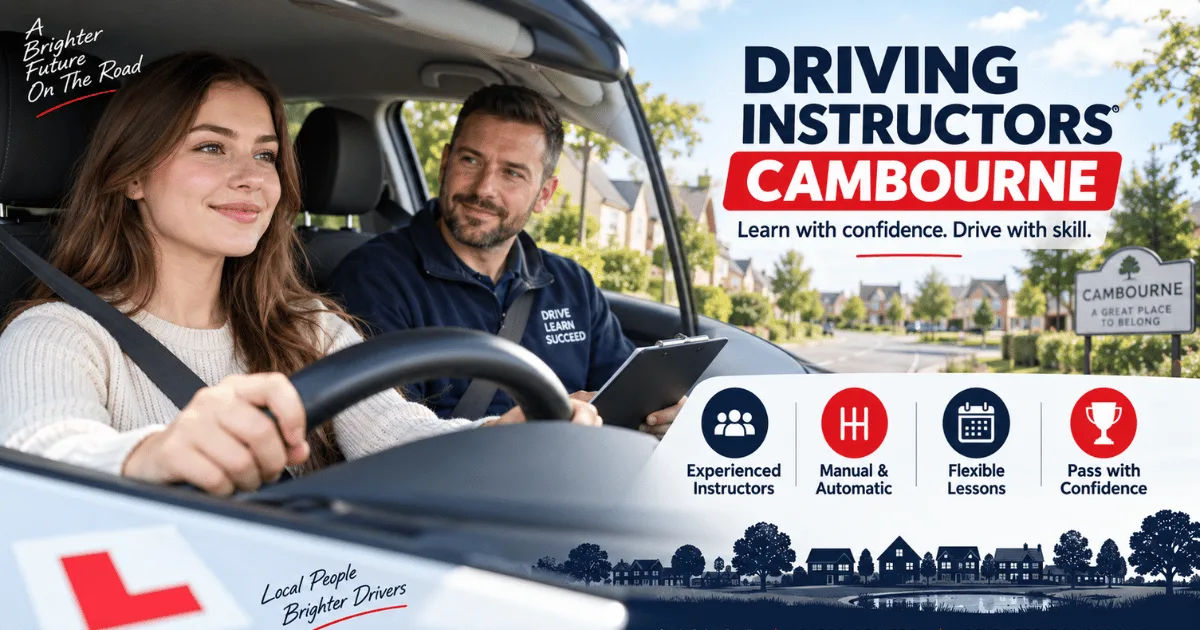 However, a good instructor should also match your learning style, explain things clearly, use a suitable training car, and prepare you properly for independent driving and the practical test.
Manual driving requires you to manage the clutch, gears, accelerator, steering, braking, and road awareness at the same time. For a beginner, this can feel like a lot at first. The right instructor can break the process into manageable steps instead of making every lesson feel overwhelming.
The good news is that finding suitable manual driving lessons near me does not have to be difficult. You simply need to know what to check before booking, which questions to ask, and which warning signs suggest that an instructor may not be the right choice.
Start by Defining What You Need
Before comparing instructors, think about what you actually want from your lessons.
Are you a complete beginner? Have you driven before but stopped for several years? Do you need help with clutch control? Are you preparing for your practical driving test?
These details matter because instructors often have different strengths. Someone who is excellent with nervous beginners may not necessarily be the best choice for an experienced learner who needs intensive test preparation.
You should also consider how often you want lessons. Weekly lessons can work well for many learners, while two or three sessions per week may help someone who wants to progress more quickly.
Check the Instructor's Qualifications
One of the first things to investigate is whether the instructor is properly qualified to provide professional driving tuition.
In the UK, driving instructors can be registered with the Driver and Vehicle Standards Agency, commonly known as the DVSA. Approved Driving Instructors, or ADIs, have met specific requirements and are permitted to provide paid driving instruction.
When comparing manual driving lessons near me, checking an instructor's professional status can give you greater confidence that you are learning from someone who meets the required standards.
You should also look at the instructor's experience. Qualifications are important, but practical teaching experience matters too. An instructor who has worked with hundreds of learners may have encountered many different challenges, from nervous beginners to learners who struggle with manoeuvres or clutch control.
Make Sure They Teach Manual Driving
This might sound obvious, but it is worth confirming before booking.
Some driving schools specialise in automatic vehicles, while others provide both manual and automatic tuition. If your goal is to learn manual driving, you need an instructor who regularly teaches in a manual car.
Manual lessons should give you plenty of opportunities to practise clutch control, gear selection, moving away, stopping smoothly, changing gears, hill starts, and dealing with different traffic conditions.
Ask what type of manual vehicle is used for lessons. A modern learner-friendly car can make the early stages considerably easier.
Consider the Instructor's Teaching Style
Not every good driver is automatically a good teacher.
Driving instruction involves communication as much as technical knowledge. Your instructor should be able to explain what you need to do, why you need to do it, and how to correct mistakes.
Some instructors are very direct. Others use a calmer, more conversational approach. Neither style is automatically better.
What matters is whether you understand the explanations and feel comfortable asking questions.
When researching manual driving lessons near me, look for reviews that mention the instructor's patience, communication, reliability, and ability to build confidence.
Reviews that simply say "great instructor" are useful, but detailed reviews can tell you much more.
Compare Prices Carefully
Price naturally matters when choosing driving lessons, but the cheapest option is not always the best value.
A lesson that costs slightly less may not save you money if the teaching is poor and you need many additional sessions.
Compare the actual lesson structure rather than looking only at the advertised hourly price.
Check whether lessons are 60, 90, or 120 minutes. Find out whether there are additional charges for test-day use of the car. Ask about cancellation policies and whether introductory offers have conditions attached.
Some schools offer discounted blocks of lessons. These can be useful, but do not purchase a large package immediately if you have never met the instructor.
It is usually sensible to have an initial lesson first and decide whether you like the teaching approach.
Check the Lesson Location
Convenience can have a major effect on consistency.
If your instructor operates close to your home, school, college, university, or workplace, attending lessons may be easier.
When searching for manual driving lessons near me, consider where lessons actually begin and end. An instructor may advertise themselves as being nearby while operating from a different area.
Ask whether they offer collection from your preferred location.
You should also find out which roads are normally used during lessons. A good training area should eventually expose you to different situations, including residential streets, busy junctions, roundabouts, dual carriageways, parking areas, and other realistic driving environments.
Look at the Training Car
The car itself can affect your learning experience.
A manual learner vehicle should be properly maintained, comfortable, and suitable for instruction. It should also have appropriate controls that allow the instructor to intervene when necessary.
Pay attention to the clutch.
Different cars have different clutch biting points. A learner who becomes comfortable in one car may initially need time to adjust when driving another vehicle.
That is normal, but a well-maintained training car with predictable controls can make learning less stressful.
Ask whether the same vehicle is normally used for your lessons. Consistency can be particularly helpful during the early stages.
Ask About Lesson Structure
A professional instructor should have some form of progression plan.
That does not mean every lesson must follow a rigid script. Learning speed varies from person to person.
However, your instructor should be able to explain what you are learning and what you need to improve.
Early lessons might cover basic controls, moving off, stopping, steering, clutch control, and simple gear changes.
As you progress, you may work on junctions, roundabouts, traffic lights, lane positioning, independent driving, manoeuvres, and more complicated traffic situations.
Eventually, lessons should become more focused on independent decision-making and test-standard driving.
When comparing manual driving lessons near me, ask how instructors monitor progress. Regular feedback can help you understand exactly where you stand.
Ask How They Handle Nervous Learners
Learning to drive can be stressful.
A learner might worry about stalling, making mistakes in traffic, approaching roundabouts, parking incorrectly, or being judged by other drivers.
A good instructor should understand that confidence develops gradually.
If you are nervous, ask how the instructor normally supports anxious learners.
A patient instructor may begin in quieter areas and gradually introduce busier roads as your skills improve.
There is no benefit in being thrown into situations that are far beyond your current ability.
At the same time, lessons should eventually challenge you. The goal is not to avoid difficult situations forever but to develop the skills and confidence to handle them safely.
Check Reviews and Recommendations
Online reviews can be extremely useful when choosing manual driving lessons near me, but they should be read critically.
Look for repeated patterns rather than relying on one extremely positive or negative review.
If several learners mention that an instructor is patient, punctual, clear, and supportive, that is a useful sign.
If multiple reviews complain about cancelled lessons, poor communication, rushed teaching, or constantly changing instructors, take those comments seriously.
Personal recommendations can also be valuable.
Friends, relatives, classmates, and colleagues may have direct experience with local instructors. Ask what they liked and disliked about their lessons.
However, remember that an instructor who suited one learner may not necessarily suit you.
Ask About Availability
A great instructor is not particularly useful if you can never get a lesson.
Ask how frequently they can offer lessons and whether they have availability at times that suit your schedule.
Consistency matters because long gaps between lessons can make it harder to retain skills.
For many learners, regular weekly lessons provide a good balance between practice and time for improvement.
If you are learning intensively, make sure the instructor genuinely has enough availability rather than promising times that are difficult to maintain.
Understand the Cancellation Policy
Before paying for lessons, understand the cancellation rules.
Most instructors need notice if you cannot attend. Last-minute cancellations may result in a charge because the instructor has reserved that time for you.
Ask how much notice is required and what happens if the instructor has to cancel.
This is especially important if you are considering buying a block of lessons.
Clear terms can prevent unpleasant surprises later.
Have a Trial Lesson
One of the best ways to evaluate manual driving lessons near me is to take an introductory lesson before committing to a large package.
During the first lesson, pay attention to how the instructor communicates.
Do they explain things clearly?
Do they allow you enough time to practise?
Do they remain calm when you make mistakes?
Do they explain corrections instead of simply taking over?
Do they give you useful feedback at the end?
You should leave the lesson with a clearer understanding of what you did well and what you need to work on.
If you feel uncomfortable with the instructor, you do not have to continue simply because you completed one lesson.
Watch for Warning Signs
There are several warning signs worth taking seriously.
An instructor who frequently cancels lessons without reasonable explanation may cause problems with your progress.
Another warning sign is an instructor who spends too much of the lesson talking instead of allowing you to drive and practise.
You should also be cautious if the instructor constantly criticises you without explaining how to improve.
Mistakes are part of learning. A learner needs correction, but correction should be constructive.
Another issue is a lack of progression. If you repeatedly practise the same easy routes without being gradually introduced to new challenges, you may not be developing the independence you need.
Think About Test Preparation
Passing the practical test is important, but learning to drive should involve more than memorising test routes.
Good manual driving lessons near me should help you develop genuine road skills.
Your instructor should eventually introduce you to independent driving and realistic traffic conditions.
Test preparation can then focus on areas such as manoeuvres, meeting test standards, dealing with faults, appropriate observations, and making safe decisions.
Ask how the instructor decides when you are ready for the practical test.
A responsible instructor should not encourage you to book a test simply because you have completed a certain number of lessons.
Readiness should be based on your actual driving ability.
Consider Instructor Continuity
Some large driving schools have several instructors.
That can be convenient, but changing instructors repeatedly can sometimes slow progress.
Each instructor may have a slightly different teaching style and may need time to understand your strengths and weaknesses.
If consistency is important to you, ask whether you will normally have the same instructor throughout your training.
If your instructor becomes unavailable, find out whether another instructor can continue your training without causing unnecessary disruption.
Think About Long-Term Value
The best manual driving lessons near me are not simply the ones that get you through a driving test.
They should help you become a safer and more independent driver.
After passing, you may drive in unfamiliar areas, during poor weather, at night, on motorways, or in heavy traffic.
Your lessons should therefore develop decision-making rather than simply teaching you how to complete a test route.
A strong instructor will explain the reasoning behind good driving habits.
For example, instead of simply telling you when to change gear, they can help you understand how road speed, engine sound, traffic conditions, and the road ahead influence your decision.
That knowledge becomes much more useful once you are driving alone.
Questions to Ask Before Booking
Before choosing manual driving lessons near me, consider asking these questions:
Is the instructor qualified?
Confirm their professional status and experience.
Do they teach manual driving regularly?
Make sure manual instruction is a normal part of their service.
What car will I use?
Ask about the vehicle and whether it is normally used consistently.
How long is each lesson?
Check the actual driving time rather than assuming every advertised lesson is one hour.
How often can I have lessons?
Make sure the instructor's availability matches your preferred schedule.
What happens if I cancel?
Understand the cancellation policy before paying.
How is my progress assessed?
A good instructor should be able to explain how they identify areas for improvement.
When will I be ready for my test?
The answer should be based on your driving standard rather than an arbitrary number of lessons.
Conclusion
Choosing the right instructor requires more than typing manual driving lessons near me into a search engine and selecting the first result. Distance and price are useful considerations, but they should be balanced with teaching quality, qualifications, experience, availability, reviews, vehicle condition, and your personal comfort.
Start by deciding what you need from your training. Then compare several instructors rather than immediately committing to the first one you find.
Pay particular attention to communication and teaching style. You need an instructor who can correct mistakes without making you feel uncomfortable and who can gradually increase the difficulty as your skills improve.
A trial lesson is often the easiest way to decide whether an instructor is right for you. It gives you the opportunity to experience their teaching style instead of relying entirely on advertisements or reviews.
Remember that learning manual driving involves more than controlling the clutch and changing gears. You are developing observation, judgement, anticipation, positioning, and decision-making skills that you will use every time you drive.
The right instructor should help you build those skills progressively while preparing you for the practical test. If you compare your options carefully and choose an instructor who combines professional standards with patient, structured teaching, your lessons are much more likely to be productive, comfortable, and genuinely useful for life on the road.